




Throughout the entire production, storage and usage process in the cosmetics industry, preservatives serve as core ingredients that ensure product quality, usage safety and shelf stability. They effectively inhibit microbial growth, preventing product deterioration and failure.
As one of the industry’s commonly used preservatives, Bronopol (chemical name: 2-Bromo-2-Nitropropane-1,3-Diol) is widely adopted for its outstanding preservative efficacy. However, its stability limitations and formaldehyde release concerns have become focal points for industry stakeholders, researchers, and consumers.
As public concern for cosmetic safety continues to rise, a thorough analysis of Bronopol application, value, factors affecting its stability, and formaldehyde release issues is not only crucial for safeguarding consumer health, but also propels the cosmetics industry toward compliance, safety, and sustainability.
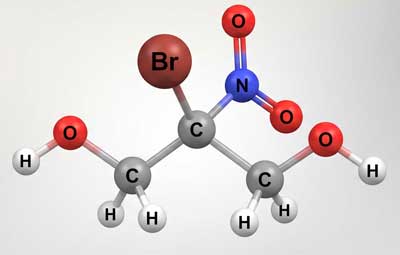
Bronopol Fundamentals Application
Bronopol, also known as Bromonitroethanol or Pylobol, exists as a white to pale yellow crystalline powder at room temperature. It is odorless and tasteless, readily soluble in water, ethanol, and propylene glycol, yet poorly soluble in non-polar solvents, such as chloroform and benzene.
With its highly effective, broad-spectrum antimicrobial and preservative properties, Bronopol holds a significant position in the cosmetics industry. It also finds cross-industry applications in architectural coatings, aquaculture, crop cultivation, oilfield operations, and other sectors.
In architectural coatings, it resists microbial contamination and extends coating longevity. In aquaculture settings, it suppresses harmful bacterial growth in water, fostering healthy habitats for aquatic animals. Its versatility across diverse scenarios underscores the reliability of its preservative efficacy.
From a mechanism perspective, Bronopol eliminates harmful microorganisms like E. coli by releasing reactive oxygen species. It maintains outstanding antimicrobial efficacy even at low concentrations, a key advantage aligning with the gentle formulation requirements of cosmetics.
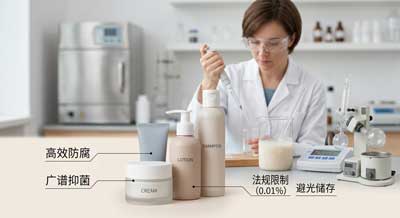
However, the use of Bronopol is subject to strict regulatory constraints. China’s Cosmetic Safety Technical Specifications (2015 Edition) explicitly stipulate that its maximum permitted concentration in cosmetics is 0.01%. Furthermore, it is strictly prohibited from being mixed with amine-based ingredients, to prevent the formation of carcinogenic nitrosamines at the source. The EU Cosmetics Regulation (EC) No. 1223/2009 also sets clear requirements for its scope of use and maximum addition limits. These stringent regulatory standards worldwide aim to balance Bronopol’s preservative efficacy with human health safety, minimizing potential risks.
Bronopol Chemical Stability
Despite its outstanding preservative efficacy, Bronopol exhibits poor inherent stability and is susceptible to external environmental factors and formulation components, with light exposure being the most critical influence.
Light energy disrupts the molecular structure of Bronopol, breaking internal chemical bonds and accelerating its decomposition in aqueous solutions. This not only causes rapid degradation of its preservative properties but also generates unknown byproducts, posing potential safety risks to the product.
In cosmetic applications, transparent packaging allows high light penetration, significantly increasing the photodegradation risk for Bronopol. This necessitates special considerations for product packaging and storage.
Beyond light exposure, temperature, pH levels, and formulation compatibility profoundly impact Bronopol’s stability. High temperatures accelerate molecular degradation rates—the higher the temperature, the faster Bronopol loses efficacy. In alkaline environments (pH > 7), its stability significantly declines, and decomposition reactions intensify markedly.
If formulations contain amines, strong oxidizing agents, or strong acids/bases, chemical reactions with Bronopol may occur. This not only reduces preservative effectiveness but may also generate harmful substances.
To address these stability challenges, the cosmetics industry has developed mature countermeasures. Packaging employs opaque, light-blocking materials to prevent light penetration. Formulations maintain pH levels in the neutral-to-slightly acidic range, avoid incompatible ingredients, and incorporate suitable antioxidants and stabilizers. Storage adheres to ambient temperature and light-protected conditions, avoiding high temperatures and direct sunlight. These comprehensive measures delay Bronopol degradation and ensure product quality.
Controversy Over Formaldehyde Release
Bronopol, as a suspected formaldehyde-releasing substance, has long been a subject of significant industry debate. Formaldehyde, recognized as a harmful substance, irritates the respiratory tract mucosa and causes skin allergies. Prolonged exposure to high concentrations of formaldehyde also carries potential carcinogenic risks. Consequently, concerns over Bronopol’s formaldehyde release have drawn considerable consumer attention.
In reality, Bronopol does not release formaldehyde under all conditions. Its formaldehyde release is a degradation byproduct that occurs only under extreme conditions such as high temperatures, intense light exposure, or alkaline environments. Under normal cosmetic storage and usage scenarios, significant formaldehyde release is virtually impossible.
While academic research on Bronopol’s formaldehyde release remains inconclusive, a clear consensus exists: when added compliantly and used normally, Bronopol releases extremely low levels of formaldehyde. Tested values typically fall below 1ppm—far below internationally recognized cosmetic safety thresholds for formaldehyde and even lower than levels found in everyday items like fruits, vegetables, and drinking water. There is no risk of exceeding safety limits, nor does it pose health hazards to the general population.
The core of the debate centers on potential risks under extreme conditions and the possibility of minor irritation from trace formaldehyde levels for sensitive skin or special populations like infants. Additionally, Bronopol molecules can interfere with traditional formaldehyde detection methods. The industry must employ high-performance liquid chromatography with post-column derivatization to achieve precise detection of trace formaldehyde. This approach also provides more scientific technical support for Bronopol’s safety assessment.
Application Restrictions and Development Direction
Issues surrounding Bronopol’s stability and formaldehyde release directly limit its application boundaries in the cosmetics sector.
For consumers, safety is the primary criterion when selecting cosmetics. Concerns over formaldehyde and stability risks can easily trigger resistance, particularly in sensitive skin and infant skincare products. Bronopol’s application is thus significantly restricted.
For cosmetic manufacturers, optimizing Bronopol’s stability and controlling formaldehyde release necessitates additional R&D costs to refine formulations and modify packaging, increasing production and development complexity.
For regulatory authorities, continuous monitoring of scientific advancements is required to refine testing standards and regulatory details, strengthen market sampling inspections, and balance product preservation needs with consumer safety rights.
Moving forward, the standardized application of Bronopol requires collaborative efforts among the cosmetics industry, research institutions, and regulatory bodies. Cosmetics companies should increase R&D investment to develop specialized stabilizers compatible with Bronopol, further optimize formulation systems, and reduce degradation and formaldehyde release risks at the source. Research institutions must conduct in-depth analyses of Bronopol’s degradation mechanisms and formaldehyde release patterns to provide scientific foundations for industry optimization and regulatory upgrades. Regulatory bodies should dynamically adjust standards based on the latest research data, refine oversight requirements, and fortify product safety defenses. Through concerted efforts, we can maximize Bronopol’s broad-spectrum preservative advantages while eliminating safety hazards, ensuring its compliant and secure application in cosmetics and related fields.