



Introduction to Peat and its Significance
Peat, often considered a humble natural material, has recently taken center stage in environmental remediation efforts. Researchers at Xihua Normal University, led by the innovative Professor Li Wenbin, have unveiled peat’s untapped potential in combating agricultural pollution—a revelation that could reshape our approach to environmental management.
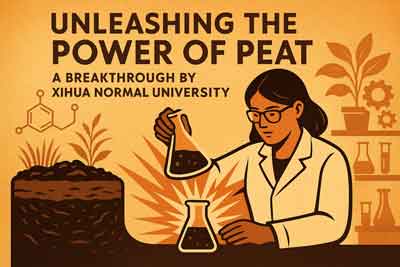
Why Peat? An Overview
Peat is formed from the accumulation of partially decayed organic matter in waterlogged conditions. This unique composition allows it to hold significant promise for environmental applications, especially in soil remediation.
The Groundbreaking Research
A Synopsis of the Study
In a recent publication in the esteemed journal Physics and Chemistry of the Earth, the team outlined their findings regarding high-resolution low-rank peat. Their approach employed cutting-edge composite modification techniques, which enabled them to create novel materials. These materials are not just any run-of-the-mill adsorbents; they’re highly effective in sequestering specific pollutants, particularly the fungicide thiophanate-methyl (FMF) and the heavy metal lead (Pb(II)).
Innovative Composite Modification Techniques
Through innovative methods, the team enhanced the properties of peat, making it more efficient as an adsorbent for harmful substances. This breakthrough could change the landscape of pollution control and remediation strategies.
Why Focus on Thiophanate-Methyl and Lead?
Understanding the Pollutants
Fungicides: Thiophanate-Methyl
Thiophanate-methyl is widely used in agriculture as a fungicide. However, it poses significant risks to the environment and human health when it leaches into soil and water systems. The study highlights how peat can effectively bind to this pollutant, preventing its harmful effects.
Heavy Metals: The Case of Lead
Lead is notorious for its toxicity, particularly in agricultural settings. It can accumulate in crops, eventually entering the human food chain. The ability to adsorb Pb(II) using modified peat is a significant advancement that could safeguard ecosystems and public health.
The Advantages of High-Decomposition Low-Rank Peat
Superior Binding Capabilities
Research indicates that high-decomposition low-rank peat is equipped with an abundance of heavy metal-binding functional groups. These groups allow for efficient fixation of heavy metals, demonstrating various mechanisms of action.
Multiple Mechanisms of Adsorption
- Ion Exchange: The exchange of metal ions with protons in the peat enhances the immobilization of heavy metals.
- Complexation: Functional groups in peat form stable complexes with hazardous materials, reducing their bioavailability.
- Physical Adsorption: The porous nature of peat facilitates the trapping of pollutants.
Environmental and Economic Benefits
Utilizing peat for pollution remediation presents numerous advantages. Not only is this approach environmentally friendly, but it also offers a cost-effective alternative to traditional remediation methods.
A Step Toward Sustainable Agriculture
Integrating Peat into Farming Practices
The integration of modified peat into agricultural practices can help alleviate the burden of chemical pollutants in soils. Farmers could adopt these novel materials, contributing to a shift toward more sustainable agriculture.
Case Studies and Future Directions
As research in this area continues, it is crucial to monitor the effectiveness of these applications in real-world scenarios. Case studies will reveal the long-term benefits of using modified peat for pollution control.
Conclusion
The recent breakthroughs in peat research at Xihua Normal University mark a significant milestone in our battle against agricultural pollution. By harnessing the power of nature through innovative scientific methods, we can pave new pathways for sustainable agriculture and environmental health. This research not only offers hope for managing fungicide and heavy metal contamination but also emphasizes the importance of finding natural solutions to contemporary environmental issues.
Frequently Asked Questions
1. What is peat, and why is it important?
Peat is a type of organic material that forms in waterlogged conditions. It is crucial for environmental applications due to its ability to retain moisture and nutrients.
2. How does modified peat help in pollution control?
Modified peat is enhanced to improve its adsorption capabilities, allowing it to effectively bind harmful pollutants like fungicides and heavy metals, preventing their spread in the environment.
3. What are thiophanate-methyl and lead, and why are they concerning?
Thiophanate-methyl is a fungicide used in agriculture, while lead is a toxic heavy metal. Both can accumulate in soil and crops, posing risks to human health and the ecosystem.
4. Are there any environmental impacts associated with using peat?
If harvested sustainably, the environmental impacts of using peat can be mitigated. It’s essential to balance peat extraction with conservation efforts.
5. What are the next steps in research on modified peat?
Future research will focus on field applications, long-term effectiveness, and understanding the broader ecological impacts of using modified peat in agriculture.