



In daily life, it’s common to see households using humidifiers to add moisture to the air. But why is humidifying the air necessary? How should humidifiers be used correctly? What is the proper way to use a humidifier?
The Importance of Air Humidity
According to national indoor air quality standards, good indoor air quality requires adequate airflow and appropriate humidity levels. The optimal indoor humidity level is generally between 45% and 65%. Excessive humidity can lead to mold growth and negatively impact the living environment. Conversely, excessive dryness can damage the mucosa of the respiratory tract and the skin.
Types of Humidifiers
Currently, there are two common types of humidifiers on the market: ultrasonic and centrifugal. They use a fan to blow moisture out of the water and spray it onto a filter mesh, effectively washing the air. This process traps particulate matter and adsorbs certain chemical and renovation pollutants. Ultrasonic humidifiers provide better humidification, have less stringent water requirements (ordinary tap water is sufficient), and can automatically adjust based on the room’s humidity. In principle, as long as the water is clean, it poses no harm to the human body.
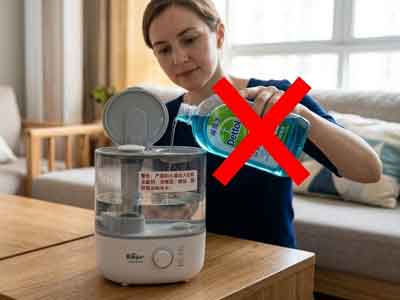
Using disinfectants in humidifiers is unscientific.
Aromatherapy humidifiers, vinegar-based humidifiers, and other methods involving the addition of disinfectants are not based on science. For example, adding formaldehyde-removing cleaners or agents to a humidifier may decompose formaldehyde in the immediate vicinity, but the consequences of inhaling and depositing these disinfectant molecules in the lungs are unpredictable.
Additionally, products such as disinfectants must have official approval numbers and clearly labeled ingredients and expiration dates. They must also be certified by national quality inspection departments and the General Administration of Quality Supervision, Inspection and Quarantine. The use of formaldehyde removers is also subject to certain conditions. First, they should be applied directly to furniture surfaces, not sprayed into the air. Second, staff must wear appropriate protective gear during application, and the room must be sealed off and kept free of personnel after the work is completed.
Functions of Air Purifiers
Air purifiers have three primary functions: first, high-efficiency filtration; second, removal of chemical pollutants; and third, sterilization and disinfection.
They achieve sterilization and disinfection through two mechanisms: first, they use high-efficiency filters to trap bacteria, viruses, and particulate matter. Second, they incorporate UV lamps or ozone generators to sterilize and disinfect the air within a specially sealed environment.
Generally, chemical disinfection is unnecessary in ordinary households. To maintain fresh air in a room, simply open the windows frequently for ventilation, maintain proper indoor humidity levels, ensure normal air circulation, and allow ample sunlight in.