



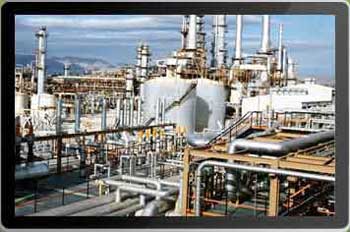
Biocide Chemicals
Shandong IRO are famous for high-quality biocide
chemicals, professional service, experienced expert
and advanced technology.Biocides category as below:
aldehydes, halogens, hydantoins, isothiazolinones and
other environment-friendly biocides.
Glutaraldehyde Solution 50%
As a professional and leading biocide chemicals manufacturer, Shandong IRO Biocide supplies high-quality Glutaraldehyde Solution 50% (a key aldehyde biocide) with strict quality control and stable product performance. Our 50% Glutaraldehyde Solution is a premium industrial-grade biocide and crosslinking agent, widely applied in medical disinfection, petroleum development, leather treatment, water treatment and other industrial fields. With advanced production technology and experienced R&D teams, we ensure the product meets international industrial standards, providing reliable bulk supply and professional technical support for global B2B clients.
Cas No.:
111-30-8
Molecular Formula:
C5H8O2
Molecular Weight:
100.12
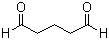
Structural Formular:
Properties:
Glutaraldehyde Solution 50% is a reactive bifunctional dialdehyde biocide, with unique physical and chemical properties that endow it with excellent biocidal and crosslinking performance. Its core technical indicators and properties are as follows:
Glutaraldehyde solution is a colorless or yellowish transparent and bright liquid with a slightly irritating odor. As for glutaraldehyde solubility, it can be dissolved in organic solvents. Such as water, ethanol, chloroform, glacial acetic acid, ether, and other organic solvents. The solubility of glutaraldehyde in water is about 100 mg/ml at 20 ℃.
In a water solution, glutaraldehyde doesn’t exist much in the free state. Instead, this kind of aldehyde biocide appears as hydrates in different forms. Most are hydrates with an annular structure.
| Item | Index |
|---|---|
| Density | 1.09~1.124 g/cm3 |
| Melting Point | -5.8 ℃ |
| Boiling Point | 101 ℃ |
| Refractive Index | 1.373 |
| Water solubility | Miscible with water, ethanol, chloroform, glacial acetic acid, ether |
Existence form: In aqueous solution, it rarely exists in free state, mainly in the form of annular structure hydrates, which ensures stable biocidal efficacy in water-based application scenarios.
Reactivity: As a typical dialdehyde, it reacts with amine and thiol groups (common functional groups of proteins) of microorganisms, and is one of the best protein cross-linking agents among known aldehydes.
Enzyme Compatibility: Has little influence on enzyme activity; most enzymes can be fixed under controlled conditions without losing activity after crosslinking.
Chemical Stability: The product is reactive in nature, easy to polymerize and oxidize, and reacts with compounds containing active oxygen and nitrogen; it is incompatible with strong oxidizing agents, and will discolor when exposed to air and polymerize when heated.
Specifications:
| Item | Index | |
|---|---|---|
| Appearance | 25% is colorless | 50% is yellowish oily transparent liquid, with irritating odor |
| Assay | ≥ 25% | ≥ 50% |
| pH | 3~5 | 3~5 |
| Methanol | 6%~7% | 6%~7% |
| Colour (Platinum-Cobalt) | 80 Hazen | 80 Hazen |
Mechanism:
Biocidal Mechanism
Glutaraldehyde Solution 50% exerts efficient biocidal effects by acting on the core structural components of microorganisms (including spores): it reacts with the amino and thiol groups in microbial protein molecules, destroying the spatial structure and biological activity of proteins, thus inhibiting the metabolism and reproduction of microorganisms, and finally achieving the effect of killing bacteria, fungi and spores.
Crosslinking Mechanism
As a high-performance homobifunctional crosslinker, it can react with amine groups in organic polymers such as proteins and nucleic acids. Under specific concentration conditions (1% concentration can reach high crosslinking degree), it can convert monomers, linear polymers or prepolymers into three-dimensional network structures, and the crosslinking degree can be adjusted with concentration, which further expands its application range in material modification and biological experiments.
Application:
Glutaraldehyde solution, 25% in water, is primarily for use as a protein cross-linking agent. This grade is not recommended for use as an electron microscopy fixative. In the laboratory, glutaraldehyde solution is commonly used as an amine-reactive homobifunctional crosslinker and as a disinfectant for medical equipment.
Medical Device Disinfection & Sterilization
It is the first choice for endoscopic disinfection (suitable for high-temperature and corrosion-sensitive endoscopic equipment). The 2% glutaraldehyde preparation (alkaline/acidic/neutral) prepared from 50% stock solution can realize sterilization in 30 minutes and long-acting bacteriostasis for more than 10 hours under normal temperature after adding 0.5% sodium nitrite as preservative. It is also widely used for sterilization and disinfection of various medical devices in hospitals and medical institutions.
Industrial Biocide & Water Treatment

As a high-efficiency industrial bactericide and disinfectant, it is widely used in petroleum development (oilfield water injection system), industrial cooling water system, sewage treatment engineering and other fields, which can effectively kill harmful microorganisms in water and prevent pipeline scaling and corrosion caused by microbial reproduction.
Organic Crosslinking Agent

As a professional protein cross-linking agent and polymer modification agent, it is used in biochemistry laboratory research, biomaterial manufacturing, plastic and coating processing: it can realize the crosslinking of nucleic acids and proteins (e.g., coupling biotin hydrazide to nucleic acids), and modify polymers to form stable three-dimensional network structures, improving the toughness and durability of materials.
Leather Treatment & Other Industrial Processing
As a high-quality tanning agent in leather industry, it can improve the structural stability and wear resistance of leather; it is also used as a preservative in food processing auxiliary and plastic coating production, with good antiseptic and fresh-keeping effects.
Hazards:
- The product has slight skin irritation; long-term or large-scale exposure may cause nausea, headache, shortness of breath and other discomforts, so it is recommended to wear professional protective equipment (gloves, goggles, masks) during operation.
- Avoid mixing with strong oxidizing agents, and do not contact with compounds containing active oxygen and nitrogen to prevent chemical reactions.
- Prevent heating and long-term exposure to air to avoid product polymerization and discoloration, and operate in a well-ventilated environment.
- When preparing low-concentration preparations (e.g., 2% disinfection solution), add 0.5% sodium nitrite as preservative before use, and use it up within the validity period.
Packing and Storage:
Shandong IRO Biocide provides bulk and standardized packaging for Glutaraldehyde Solution 50%, and supports customized packaging according to client’s procurement volume and transportation needs:
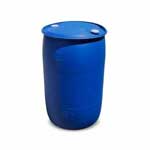
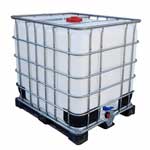
Standard Packaging: 200L steel drum, 1000L IBC tote (Suitable for global bulk procurement and long-distance transportation).
Customized Packaging: Small and medium packaging (25L, 50L etc.) can be customized according to client’s trial and small-batch usage needs.
All packaging is anti-leakage and anti-corrosion, in line with international transportation standards, and is equipped with complete product instructions and MSDS documents.
Synonyms:
Glutaraldehyde; Glutaric dialdehyde; Glutaric acid dialdehyde; Glutaral; 1,5-Pentanedial; Pentanedial; Pentane-1,5-dial; Glutaraldehyde 25% solution in water; Glutaraldehyde 50% solution in water; Glutaraldehyde 8% solution in water; Glutaric dialdehyde 24 wt.% solution in water; Glutaric dialdehyde 25 wt.% solution in water; Glutaric dialdehyde 50 wt.% solution in water; Glutaraldehyde (24-26% in water); Glutaraldehyde (ca. 50% in water); Glutaraldehyde 25% reagent grade; Glutaraldehyde 25% EM grade; Glutaraldehyde solution for electron microscopy; Potentiated acid glutaraldehyde; Glutaraldehyde solution; Glutaraldehyde 25% aq. soln.;Glutaraldehyde 50% aq. soln.
You will learn about Glutaraldegyde further in this post — How To Make 2.5 Glutaraldehyde From Chemicals?